
Budget Planning for Asphalt Maintenance: A Multi-Year Strategy for Glendale Property Owners
If you own property in Glendale, Arizona, you understand that maintaining your asphalt surfaces requires careful planning and strategic investment. Whether you manage a commercial parking lot, apartment complex, or retail property, the costs associated with asphalt maintenance can quickly become overwhelming without proper budgeting. This comprehensive guide will help you develop a sustainable multi-year asphalt strategy that protects your investment while controlling expenses.
Understanding Asphalt Deterioration and Timeline
Asphalt surfaces in Glendale face unique challenges due to the desert climate, intense UV radiation, and temperature fluctuations that occur throughout the year. Understanding the natural deterioration process is essential for effective parking lot maintenance planning. Most asphalt pavements experience predictable wear patterns that accelerate over time if left unaddressed.
The lifespan of asphalt typically follows a consistent pattern. During the first three to five years, your pavement remains relatively stable with minimal visible damage. However, as oxidation occurs and the binding agents break down, cracks begin to form. Without intervention, these minor cracks expand into larger fissures, allowing water infiltration that weakens the base layers beneath the surface. This cascading deterioration can reduce your pavement’s total lifespan from 20 years to just 10 or 12 years.
Property owners in Glendale, Arizona should conduct initial assessments of their asphalt surfaces to determine the current condition. This evaluation becomes the foundation for your entire multi-year asphalt strategy. Professional pavement evaluations cost relatively little upfront but provide invaluable information about maintenance needs and projected expenses.
Sealcoating as Your First Line of Defense
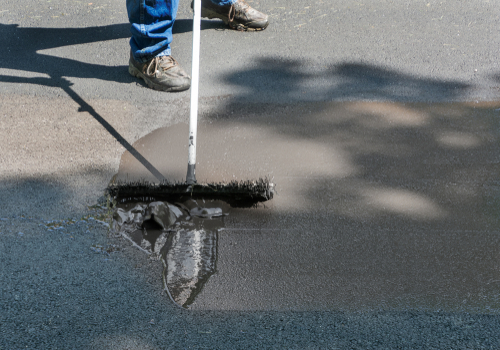
Sealcoating represents one of the most cost-effective components of any budget planning framework for asphalt maintenance. This protective treatment creates a barrier against oxidation, UV damage, and water penetration that naturally occurs in Arizona’s intense climate. Many property owners overlook sealcoating, viewing it as an optional cosmetic treatment rather than essential maintenance.
The reality is that sealcoating extends pavement life by five to ten years when applied at the right intervals. For property owners in Glendale managing parking lot maintenance, sealcoating should be performed every two to three years depending on traffic volume and exposure conditions. High-traffic commercial parking lots may need treatment every two years, while lighter-use areas can extend the interval to three years.
Your sealcoating budget planning should allocate approximately 10 to 15 percent of your annual pavement maintenance budget toward this preventative measure. For a typical commercial lot covering 20,000 square feet, this translates to roughly $400 to $800 per application. Spreading these costs across your multi-year asphalt strategy makes the expense manageable and far less costly than reactive repairs later.
Many property owners find that investing in regular sealcoating reduces overall maintenance expenses by 30 to 40 percent over a decade. The key is consistency; skipping years or delaying treatment undermines the protective benefits and accelerates underlying deterioration.
Crack Repair and Patching Strategies
After sealcoating, crack repair represents the next tier in your parking lot maintenance hierarchy. Addressing small cracks before they expand into large fissures prevents more extensive damage and keeps repair costs manageable. Your sealcoating budget planning should account for crack sealing as a separate line item, typically representing 5 to 10 percent of annual expenditures.
There are two primary approaches to crack repair in Glendale: cold-applied and hot-applied sealants. Cold-applied products offer convenience and lower labor costs but provide shorter service life, typically lasting two to three years. Hot-applied rubberized sealants cost more initially but last five to seven years, making them superior for long-term multi-year asphalt strategy planning.
Patching becomes necessary when deterioration extends beyond simple surface cracks. Spalling, potholes, and alligator cracking indicate that base layer damage has occurred. Property owners must act quickly when these conditions appear because they accelerate further deterioration. A single pothole left unrepaired can expand into a much larger area within months, especially after Arizona’s infrequent but intense rainstorms.
Budget planning for crack repair should reflect your pavement’s current condition. New or well-maintained surfaces require minimal crack work annually, perhaps $200 to $500 per 20,000 square feet. Older or heavily trafficked parking lots may need $1,500 to $3,000 annually for crack and patch work.
Overlay and Major Rehabilitation Decisions
As your pavement approaches its eighth to twelfth year, major rehabilitation becomes necessary. This is where long-term multi-year asphalt strategy planning proves invaluable. Rather than facing a sudden crisis, informed property owners budget gradually for these larger expenditures.
Two primary options exist for aging pavement: overlay and complete reconstruction. An asphalt overlay involves applying a new wearing course over the existing pavement base, typically lasting 10 to 12 years. This costs significantly less than full reconstruction, ranging from $1.50 to $2.50 per square foot. For a 20,000 square foot lot, expect $30,000 to $50,000 in overlay costs.
Complete reconstruction removes and replaces the entire pavement structure. While more expensive at $3 to $5 per square foot, full reconstruction can be necessary if base layer deterioration is severe. This represents the most significant expense in any parking lot maintenance program.
Smart property owners in Glendale should establish a capital reserve beginning in year five or six to accumulate funds for these major projects. Contributing $2,000 to $4,000 annually into a dedicated reserve allows you to tackle overlays or reconstruction without devastating your operating budget or requiring emergency financing.
Developing Your Multi-Year Asphalt Strategy
Creating an effective multi-year asphalt strategy requires balancing immediate maintenance needs with future planning. Start by documenting your current pavement condition through professional evaluation. This establishes your baseline and identifies which maintenance category your property occupies.
For properties with relatively new pavement, focus on sealcoating and minor crack repair. Annual budgets typically range from $500 to $1,500 for a standard commercial lot. This preventative approach extends pavement life and minimizes major expenses.
Properties with pavement in the five to eight year range need more intensive crack and patch work alongside sealcoating. Budget planning should allocate $2,000 to $4,000 annually while establishing your capital reserve for eventual overlay work.
Older pavement requires comprehensive evaluation to determine whether overlay or reconstruction makes more financial sense. Sometimes a well-maintained parking lot in good condition despite age can be extended further with aggressive crack repair and overlay. Other situations demand complete reconstruction.
Document everything in writing as part of your multi-year asphalt strategy. Maintain records of sealcoating dates, repair work completed, costs incurred, and contractor information. This historical data helps predict future needs and provides documentation for property appraisals or insurance purposes.
Maximizing Your Investment Through Consistency
The most successful parking lot maintenance programs in Glendale share common characteristics: consistency, proactive planning, and documented maintenance. Property owners who skip scheduled sealcoating or delay crack repairs invariably face exponentially higher costs within a few years.
Professional property managers recommend scheduling major pavement evaluations annually, with detailed inspections every three years. These checkpoints allow you to adjust your budget planning based on actual conditions rather than estimates. Early detection of emerging problems prevents small issues from becoming expensive repairs.
Another critical factor in successful budget planning for asphalt maintenance involves choosing quality contractors. The lowest bid doesn’t always deliver the best value. Research contractors thoroughly, verify their experience with Glendale properties, check references, and confirm proper licensing and insurance. A quality contractor using quality materials extends your pavement’s life and provides better long-term value.
Conclusion
Budget planning for asphalt maintenance in Glendale, Arizona demands a strategic, multi-year perspective rather than reactive repair approaches. By understanding asphalt deterioration patterns, implementing sealcoating and crack repair systematically, and planning for major rehabilitation work well in advance, property owners can significantly reduce overall maintenance expenses while extending pavement life.
Your multi-year asphalt strategy should begin with professional evaluation, establish consistent sealcoating and repair schedules, and build capital reserves for eventual overlay or reconstruction needs. The investment required for proactive parking lot maintenance pales in comparison to the costs associated with emergency repairs, reconstruction, and potential liability issues from neglected surfaces. By implementing these strategies, Glendale property owners can confidently manage their asphalt assets while maintaining budgets and protecting long-term property values.
Need a Paving Company Near You?
Categorised in: Asphalt Repair
This post was written by admin